What a Service Call Actually Covers in Hudson
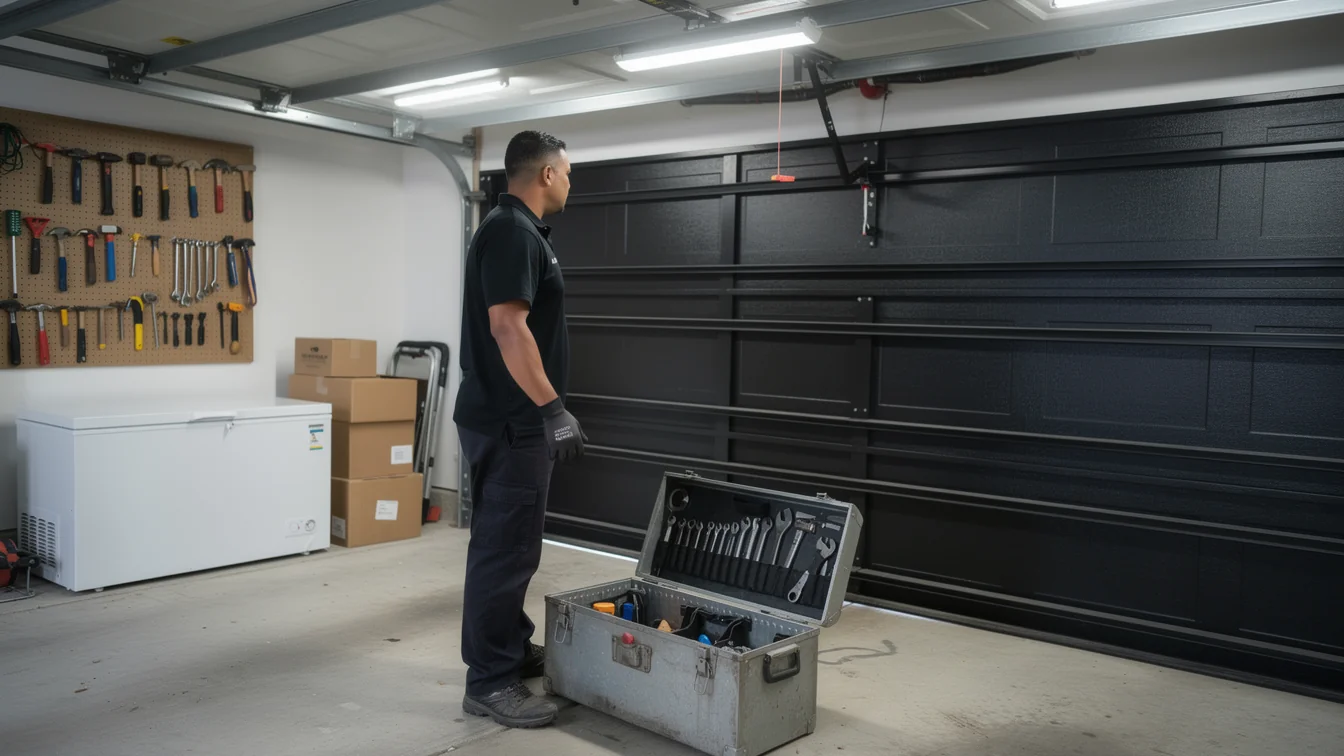
A Hudson, WI service call means diagnosis, parts, and labor priced to match houses built 1972-2004 and gear rated for our severe cold winters in this area.
Read moreHudson, WI homeowners: garage door grinds, thumps, or squeals usually trace to 1980s-90s hardware aging under this area's severe cold winters and swings in temperature.
Local detail
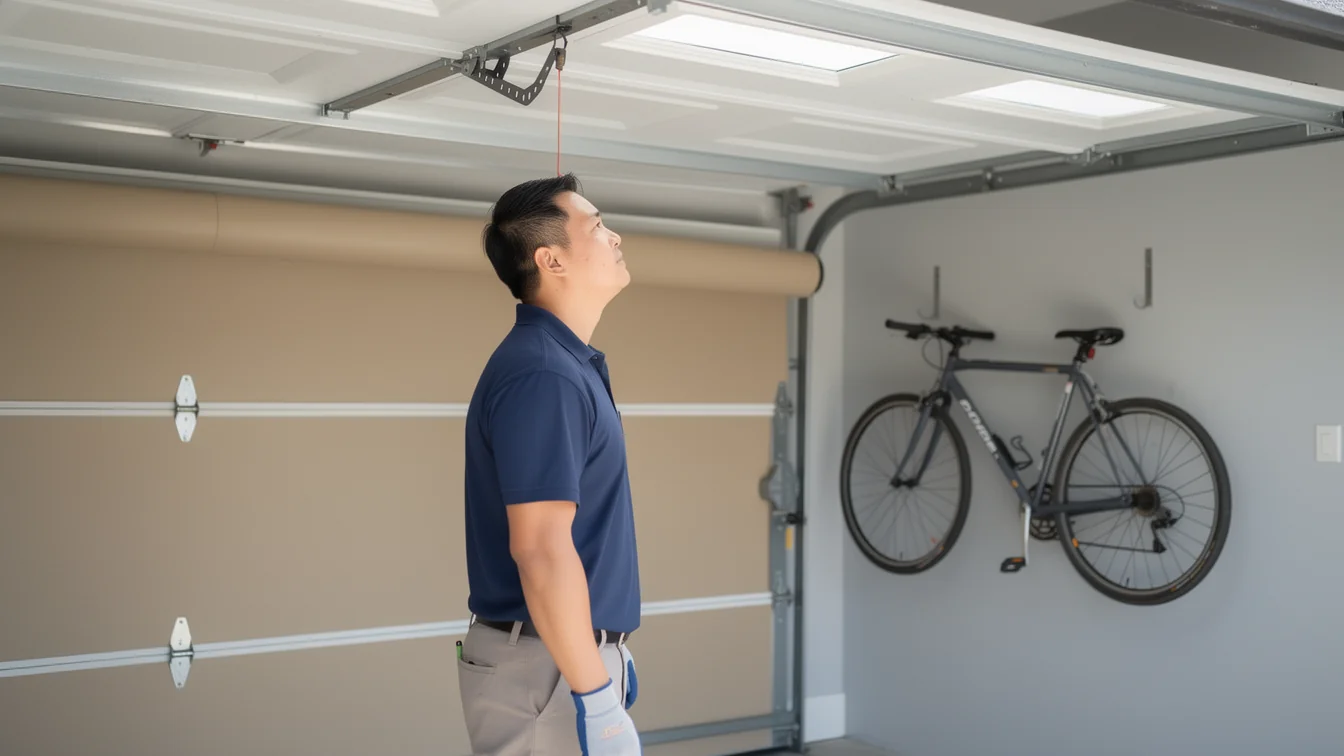
Most houses in Hudson went up between 1972 and 2004, with the typical home dating to 1987, and across the 13 named areas that make up this market, the bulk of the stock is 1980s and 90s construction. That matters because a lot of the garage doors out there are either original to the house or a first replacement from that same window, running on torsion springs, rollers, and cable drums that are thirty-plus years old. A grinding sound on the way up is almost always a roller riding dry or flat-spotted in its track. A rhythmic thump is usually a worn roller hitting the seam where track sections bolt together, or a spring coil that's lost tension and is letting the door drop unevenly for a split second before the cable catches it. A sharp bang, once, is different - that's often a cable or spring giving out, not wearing in. None of these sounds start overnight on a door that's been quiet for three decades. They build for weeks, usually starting as a faint squeal and getting worse, which is the door telling you the hardware is reaching the end of what it was built to do.
The area
Hudson sits in a climate band classed as cold and severe, and cold changes how steel and grease behave inside a garage door system. Factory lubricant inside torsion spring coils and roller bearings stiffens as temperatures drop, so a door that ran quiet in September can start grinding by January simply because the grease isn't flowing the way it did. Steel components also contract slightly in deep cold, which can turn a loose bracket or a slightly worn roller from a non-issue into an audible one almost overnight. This is why a lot of noise calls cluster around the first hard cold snap of the season rather than spreading evenly through the year - the hardware was already marginal, and the cold is what pushes it past the point of staying quiet. If your door has been fine for years and suddenly starts complaining the week it drops below zero, that's not a coincidence. It's the cold finding the weak point that was already there.
What we find
A noise that gets worse instead of better is not something that fixes itself. Rollers wear unevenly, and an unevenly worn roller puts more load on the ones next to it, so the problem spreads down the track. A spring that's lost tension doesn't rebalance on its own either - it keeps losing tension until it lets go, usually while the door is moving, which is the point where a repair call turns into a door that won't open at all or, worse, drops. Given that most of the doors in this area are running on hardware from the 1980s and 90s, a lot of that hardware is well past any reasonable service life even if it hasn't failed yet. I'll say plainly that not every noisy door needs full replacement - sometimes it's a lubrication and roller swap and you're done for years. But if the springs are original to a house built in the 1980s, I'm not going to tell you to just lubricate them and hope. That's the honest limitation here: I can quiet a noise, but I can't make thirty-five-year-old steel young again, and I'd rather say that upfront than have it fail on you later.
How we work
I don't have a price list to hand you here, and I'm not going to make one up. What drives the cost on a noise call in this area is mostly what's actually worn: a roller and lubrication job is a small fraction of what a full spring and cable replacement runs, and a door that's original to a house built in the 1987 range often needs more than one thing addressed at the same visit once we're in there. With a median household income of $87,500 across this market, most of what I see homeowners choose is a real repair over a stopgap - fix what's worn rather than grease over it and call again in six months. I can tell you what's making the noise and what it'll take to quiet it once I've looked at the door in person. I can't give you an honest number without seeing the hardware, and anyone who quotes a garage door repair over the phone sight-unseen on a thirty-year-old system is guessing.
Questions
Not urgent, but it's not nothing either. In this cold a squeal is usually a dry roller or hinge pin, and it tends to get worse through the winter as the grease stiffens further. Worth getting looked at before it turns into a flat-spotted roller that's grinding instead of squealing.
Cold thickens the lubricant in the springs and roller bearings and makes steel parts contract slightly, so marginal wear that's silent in summer becomes audible once temperatures drop. If the noise started with the first cold snap, that's the likely cause.
Not automatically. If the track, springs, and rollers are sound and it's one worn part, a repair is usually the right call. But a door original to a house built in the 1980s is old enough that I'll check the springs and cables closely before recommending anything partial.
Recommendation
More garage door guides for Hudson homeowners.
A Hudson, WI service call means diagnosis, parts, and labor priced to match houses built 1972-2004 and gear rated for our severe cold winters in this area.
Read more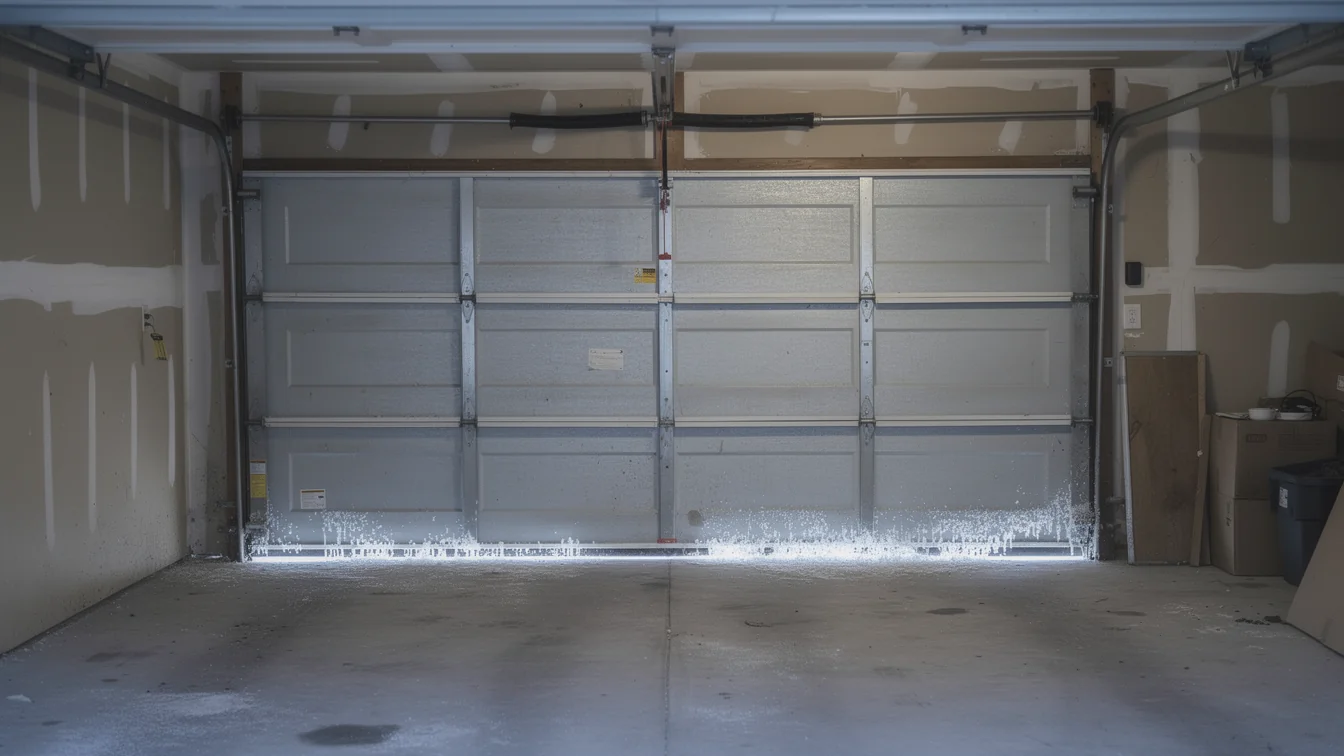
Hudson, WI homes built mostly from 1972 to 2004 face severe cold swings that test original springs, tracks, and insulation.
Read more
Hudson homes built mostly 1972-2004 run older openers that struggle in cold-severe winters and outages.
Read moreReady when you are
Hudson Garage Door Pros repairs and installs garage doors, springs and openers in Hudson, WI and the surrounding area.